


Guide to Regeneration Operation Procedure for Industrial Ultrapure Water Mixed Bed System
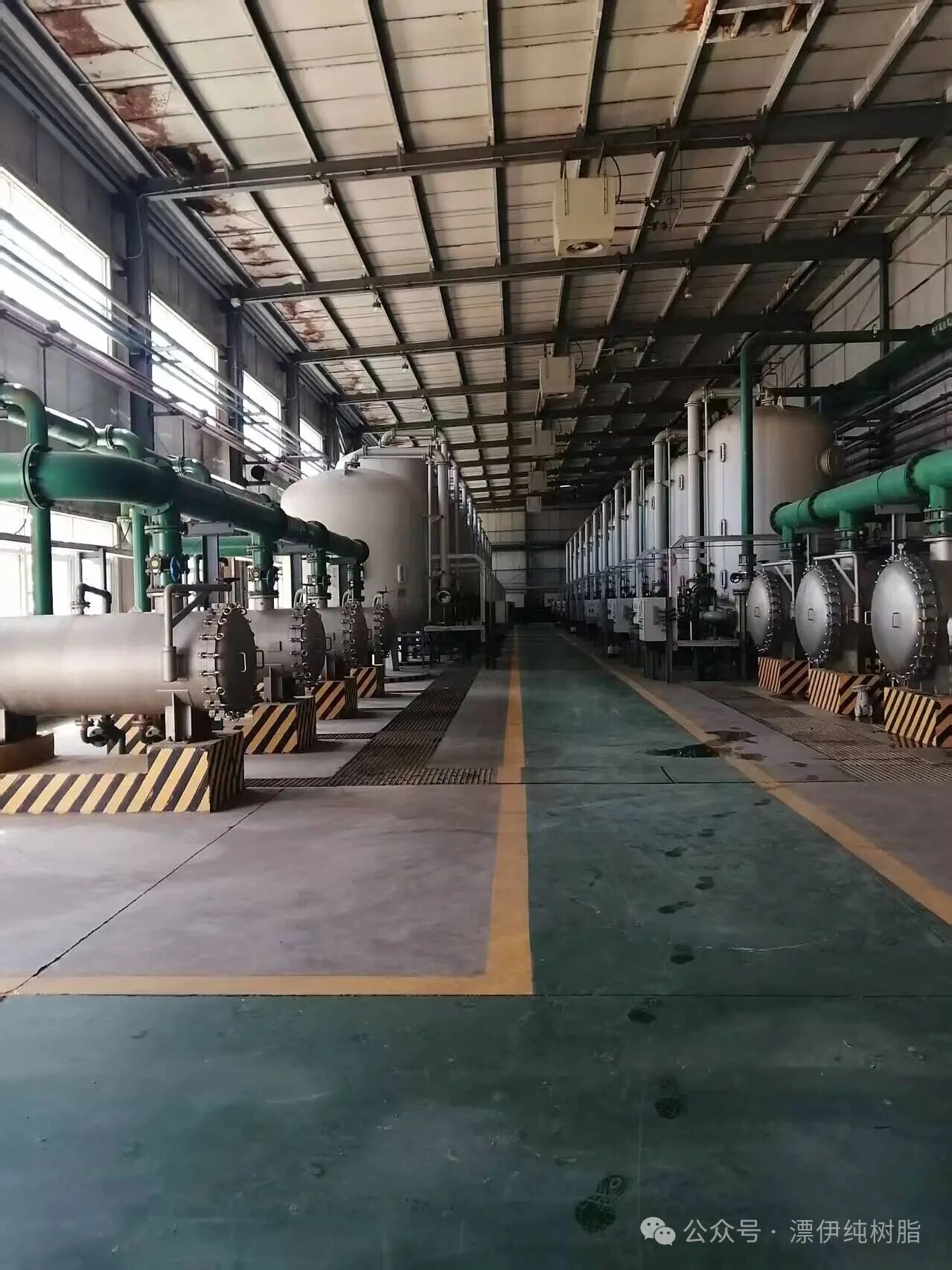
Regeneration Pretreatment of Mixed Bed Systems
The core objective of the regeneration pretreatment for a mixed bed system is to restore the adsorption capacity of the cation and anion exchange resins. The entire process is like a thorough "cleaning" and "restoration" of the resin, mainly divided into five key steps: backwashing for layering, simultaneous regeneration, displacement rinsing, mixing, and final rinsing. (If it is pretreatment, layering is not required. First, load the cation resin to the height of the intermediate drain, then load the anion resin, generally the volume of anion resin is twice that of the cation resin.)
Step 1: Backwashing for Layering
Operation: Water enters from the bottom of the mixed bed, flowing slowly upward to rinse the resin layer. Start with a low flow rate, then gradually increase to about 10 m/h after the resin loosens, lasting 10-15 minutes. Then stop the water inlet and allow the resin to settle naturally.
Purpose & Principle: Utilizing the difference in wet true density between cation and anion resins (cation resin is heavier, anion resin is lighter), under the action of water flow, the heavier cation resin settles at the bottom, while the lighter anion resin floats to the top, achieving separation and preparing for subsequent separate regeneration.
Key Tip: After settling, drain the water level in the bed to about 10 cm above the resin layer surface to reserve space for the next step of introducing regenerant.
Step 2: Simultaneous Regeneration
Operation: This is the core of the regeneration process. Anion Resin Regeneration: Introduce 3-4% sodium hydroxide (NaOH) solution from the top of the mixed bed, flowing downward through the anion resin layer; the waste liquid is discharged from the intermediate drain. Cation Resin Regeneration: Simultaneously, introduce 4-5% hydrochloric acid (HCl) solution from the bottom of the mixed bed, flowing upward through the cation resin layer; the waste liquid is also discharged from the intermediate drain.
"Hold-down Water": To prevent mutual contamination of acid and alkali liquids, during anion resin regeneration, a small amount of cleaning water (called "hold-down water") is introduced from the bottom to push any potentially infiltrating alkali back to the intermediate drain. During cation resin regeneration, cleaning water is introduced from the top.
Purpose & Principle: Using high-concentration acid and alkali regenerants to displace the ions adsorbed on the resins, restoring them to their original H⁺ form (cation resin) and OH⁻ form (anion resin).
Key Tip: Strictly control the concentration and flow rate of the regenerant, and constantly monitor whether the "hold-down water" is functioning properly. This is crucial for preventing cross-contamination and ensuring regeneration effectiveness.
Step 3: Displacement Rinsing
Operation: After stopping the introduction of acid and alkali, continue to introduce water from both the top and bottom to rinse the cation and anion resins; the waste liquid is still discharged from the intermediate drain. Rinse until the acidity or alkalinity of the discharged water is below 0.5 mmol/L.
Purpose & Principle: Thoroughly rinse away the regenerant remaining inside the resin layer and the displaced impurity ions.
Key Tip: Rinsing must be thorough; otherwise, residual regenerant will affect the quality of the effluent when the mixed bed is initially put into operation.
Step 4: Mixing
Operation: First, drain the water level in the bed to 100-200 mm above the resin layer surface. Then, introduce clean compressed air with a pressure of 0.1-0.15 MPa from the bottom of the mixed bed, stirring for about 5 minutes to evenly remix the previously layered resins. After stopping the air supply, immediately and quickly drain the water, using the falling water to make the mixed resin settle rapidly, preventing it from separating again due to density differences.
Purpose & Principle: Evenly mixing the regenerated cation and anion resins is equivalent to forming countless miniature multi-bed units within the mixed bed. This ensures that during water production, the water flow fully contacts both types of resin, undergoing multiple exchanges to obtain high-purity water.
Key Tip: The compressed air must be oil-free to avoid contaminating the resin. Quick drainage after mixing is the key to the success of this step.
Step 5: Final Rinsing
Operation: Introduce water from the top of the mixed bed and discharge it from the bottom, performing the final cleaning of the mixed resin layer at a flow rate of 10-20 m/h.
Purpose & Principle: Further rinse away any broken resin particles or minor impurities generated during the mixing process, and compact the resin layer.
Key Tip: Continue the final rinse until the conductivity and silica content of the effluent meet the qualified standards (e.g., conductivity below 0.2 µS/cm). Only then can the mixed bed be put back into water production or placed on standby.